


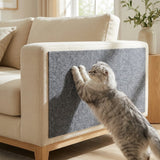


You do not need to "win" a fight with your cat's claws. You need a better offer in the same place, plus a short window where the sofa is less tempting while the new habit sticks.
This is a practical how-to for households dealing with shredded arms and corner panels, built on mainstream animal-welfare guidance. It sits next to our science post on why sofas get chosen. Educational home care only. Not a substitute for veterinary or certified behavior help when problems are intense or sudden.
What you'll get
- A clear redirect sequence (preference, placement, reward)
- Temporary protection tactics that buy time
- Play timing tips so evening energy does not land on upholstery
- Soft links to Casa Michi protectors when you need a physical barrier
Goal: teach where to scratch, not stop scratching
Cats scratch to play, stretch, mark, and maintain claws. The best tactic is teaching appropriate targets (posts, pads, trees), not erasing the behavior (per ASPCA scratching guidance).
That means:
- Provide sturdy, appealing scratch surfaces
- Place them where the cat already wants to scratch
- Make forbidden surfaces temporarily less rewarding
- Skip force, slap, and "paw dragging" training
The core move: put the legal surface next to the furniture being damaged, reward use, and cover or deter the old target while the switch happens.
Step 1: Diagnose the sofa preference (two minutes)
Stand where the damage is and answer three questions:
- Orientation: Vertical rakes up the arm, or horizontal shreds along a seat edge?
- Material feel: Loose weave fabric, leather-like surface, wood corner?
- Context: After naps, when you come home, during play zoomies, or overnight?
Write the answers down. They drive the shopping and placement decisions more than brand names do.
Step 2: Offer a better surface that matches the job
- If your cat prefers...: Full-body vertical stretch on a sofa arm. Start with...: Tall, stable sisal or carpet post that will not tip
- If your cat prefers...: Horizontal picking along a cushion edge. Start with...: Flat cardboard or sisal pad at floor or couch height
- If your cat prefers...: Corner chewing of fabric. Start with...: Corner-wrapped protector plus a nearby vertical post
Tips worth keeping:
- Try more than one texture early (cardboard, sisal, wood, carpet)
- Stability matters. Wobbly posts teach cats to avoid them
- Height for stretch matters. Many cats like drapes for the same reason
- Do not throw away a shredded-but-loved post too soon. Familiar scent and grip often help
Scent the new surface lightly with catnip only if your cat responds to catnip. Hang a wand toy nearby for a day or two so investigation feels like play, not a trap.
Step 3: Place the good option beside the problem
Location beats perfection. A gorgeous tree in a guest room will not save the living-room sofa.
- Put the post or pad within a paw's reach of the damaged panel
- Keep an alternate scratch option in other high-traffic rooms (hallway, bedroom doorway)
- In multi-cat homes, provide more than one station so cats are not competing for the same corner
A 2024 study linked more unwanted scratching with posts cats did not use and with factors such as play patterns and child presence. You cannot control every variable, but you can control whether the legal surface sits in the room where damage happens.
Step 4: Protect the sofa while the habit flips
Redirect without protection is slow for fabric that already smells and feels "right" to your cat. Temporary deterrents and covers are tools, not moral judgments.
Common, cat-friendly options:
- Soft throws or fitted covers over the hot spot
- Double-sided sticky tape made for pets
- Upside-down vinyl runner (nubby side up) on the approach path
- Purpose-built anti-scratch mats or sofa protectors that cover arms and corners
Casa Michi options in Comfort & Scratchers include an Anti-Scratch Sofa Mat and a Sofa Scratch Protector for households that want a cleaner look than foil or runners. Use them on the panel that gets hit, and keep the preferred scratch surface right beside them.
Trim nails on a calm schedule if your cat tolerates it. Soft nail caps are an optional temporary layer some caregivers use. Follow product directions and stop if the cat fights application.
Step 5: Reward legal scratching and end play cleanly
When you see claws on the post:
- Quiet praise or a small treat
- Optional: one short wand chase that ends with a capture
When you see claws on the sofa:
- Interrupt gently without scare tactics (a calm redirect to the post works better than a water spray for many cats)
- Guide attention to the legal surface, then reward engagement there
- Do not pin the cat or drag paws down the post (this can create fear of you and of the post)
Play timing helps more than people expect. Short hunting-style sessions (a few minutes) that finish with a "catch" and a snack can leave cats settled. Very long, frantic play right before bed can leave them primed to rake the couch at 2 a.m. Feline environmental-needs guidelines emphasize completing the hunt sequence, not endless teasing.
What not to do
- Do not punish after the fact. Cats do not connect a scolding to an hour-old claw mark the way people hope.
- Do not rely on a single hidden post.
- Do not use declawing as a behavior plan. Major welfare groups oppose it, and it is not proven as a fix for behavior concerns.
- Do not ignore sudden changes. New aggression, litter issues, or frantic scratching alongside illness signs deserves a vet visit.
A seven-day starter plan
Day 1-2: Map damage. Place matched scratch surfaces beside hot spots. Cover sofa panels.
Day 3-4: Cue and reward post use twice daily. Keep play sessions short and complete.
Day 5-7: If the cat still prefers fabric, adjust texture or height. Add a second station on the opposite side of the sofa. Keep protection on until legal scratching is the default for at least several days.
Reassess weekly. Success looks like frayed sisal and intact upholstery, not a cat that never scratches.
FAQ
How long until the sofa is safe uncovered?
Often one to three weeks of consistent redirect, sometimes longer for entrenched habits. Leave protection on until you see reliable post use.
What if my cat ignores every post?
Change height, angle, and material before buying more of the same. Move the post to the exact sofa corner. Add a horizontal pad. Pair with play that ends on the post area.
Can I use citrus sprays or loud alarms?
Strong smells and startle tools can backfire or create fear. Prefer physical covers and better alternatives. If you need specialty help, look for a veterinary behaviorist or certified applied animal behaviorist.
Where should I shop first?
Start with a sturdy scratch surface that matches preference, then add a protector if fabric is still losing. Browse Comfort & Scratchers when you want both in one place.
Takeaway
Stopping sofa damage is less about dominance and more about design. Match the scratch surface to how your cat already scratches, place it beside the couch, protect the fabric while the habit flips, and reward the right claws-on-target moments. Short, complete play supports the plan. Punishment does not.
For the research behind why sofas get targeted, see what research found about why cats scratch sofas.
Sources
- ASPCA. Destructive Scratching. https://www.aspca.org/pet-care/cat-care/common-cat-behavior-issues/destructive-scratching
- Humane World for Animals. How to stop cats' destructive scratching. https://www.humaneworld.org/en/resources/how-stop-cats-destructive-scratching
- AVMA. Alternatives to declawing. https://www.avma.org/resources-tools/animal-health-and-welfare/animal-welfare/alternatives-declawing
- Salgirli Demirbaş Y, et al. Evaluating undesired scratching in domestic cats. Frontiers in Veterinary Science, 2024. DOI: 10.3389/fvets.2024.1403068
- Ellis SLH, et al. AAFP and ISFM Feline Environmental Needs Guidelines. Journal of Feline Medicine and Surgery, 2013. https://pmc.ncbi.nlm.nih.gov/articles/PMC11383066/